Canadian family immigration · CTIV
Family Sponsorship in Canada
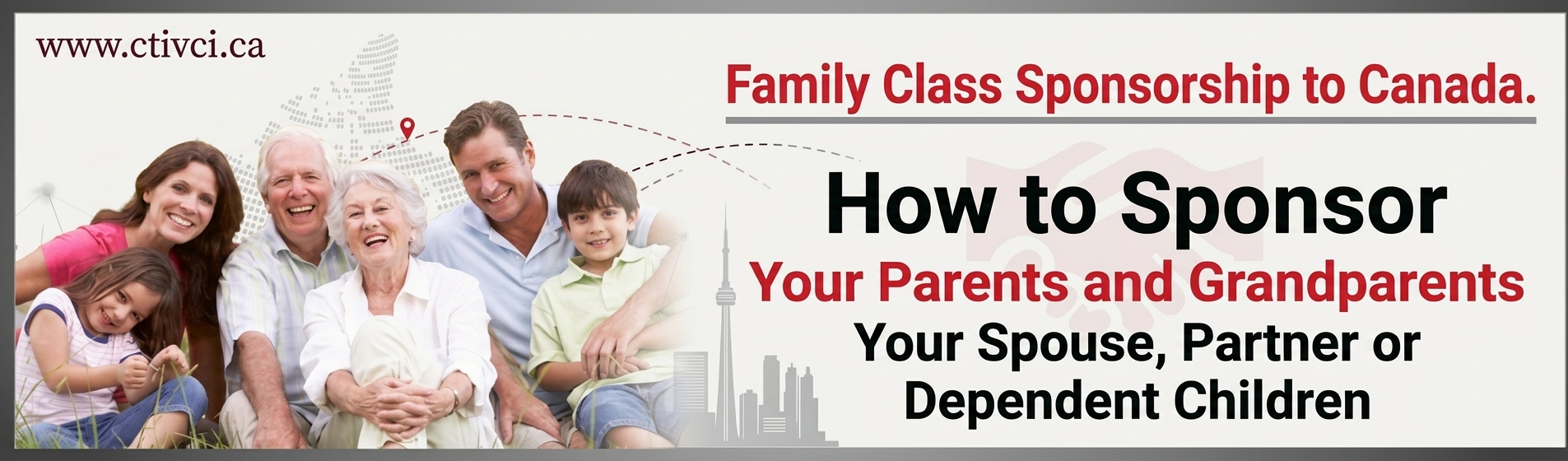
Canadian citizens and permanent residents may be able to sponsor eligible family members for Canadian permanent residence. The right process depends on your relationship, the sponsored person's circumstances and the requirements of the specific sponsorship category.
Professional Review and Regulatory Verification
Professional reviewer
Sanjay Kumar Prasher
Regulated Canadian Immigration Consultant (RCIC)
College ID: R514499 · RCIC – L2 as displayed in the CICC record supplied to CTIV.
Read Sanjay Prasher's professional profile and independently verify current registration through the CICC Public Register.
Use this reviewer attribution only after Sanjay has reviewed and approved the published page. Licence status and entitlement to practise should be checked against the live College register; a saved screenshot is only point-in-time evidence.
Who Can Sponsor a Family Member?
In general, a sponsor must be at least 18 years old and be a Canadian citizen, a person registered in Canada as an Indian under the Indian Act, or a permanent resident of Canada. Additional requirements apply, and the rules differ by family relationship and sponsorship category.
For example, a permanent resident generally must live in Canada to sponsor a family member. A Canadian citizen living abroad may sponsor an eligible spouse, partner or dependent child if they demonstrate an intention to live in Canada when the sponsored person becomes a permanent resident.
Which Family Members May Be Sponsored?
Spouse or Partner
Eligible spouses, common-law partners and, in limited circumstances, conjugal partners may qualify under the applicable family class rules.
Dependent Children
A child may qualify as a dependent under IRCC's definition, which includes age and dependency conditions. Review the current definition and exceptions carefully.
Parents and Grandparents
Parents and grandparents may be sponsored through the Parents and Grandparents Program when the sponsor meets the requirements and is invited to apply. Intake and invitation procedures can change.
Other Eligible Relatives
There are limited situations in which another relative may be sponsored, such as certain orphaned relatives or the “other relative” provision when specific conditions are met. These are not general sponsorship options for any family member.
Inland and Outland Spousal Sponsorship
“Inland” and “outland” are commonly used terms when discussing spouse or partner sponsorship. They describe where the sponsored spouse or partner is living and which application route may be appropriate. They are not interchangeable labels for every family sponsorship category.
Spouse or Partner in Canada
An in-Canada spouse or common-law partner application may be appropriate when the sponsored person is living in Canada and meets the applicable requirements. Eligibility for an open work permit is subject to separate conditions and current IRCC instructions.
Spouse or Partner Outside Canada
A family class application may be used when the sponsored spouse or partner lives outside Canada. The applicant may generally remain outside Canada while the application is processed, subject to travel and temporary-entry requirements.
Choosing the correct route depends on residence, status, travel plans, relationship evidence and the specific application requirements. Review the current IRCC spouse, partner and child sponsorship guide.
How CTIV Approaches a Family Sponsorship Assessment
A careful assessment begins with the facts of the relationship and the sponsor's eligibility. CTIV's review process is designed to identify the relevant category, explain the evidence required and flag issues that may need further attention. It does not guarantee approval or a particular processing time.
Canadian Family Sponsorship Guidance from CTIV
Family sponsorship applications involve important legal commitments and detailed evidence. CTIV provides immigration consulting support to help clients understand the applicable process, organize information and prepare applications in accordance with the instructions relevant to their circumstances.
- Category-focused assessment: Identify the sponsorship stream that may apply to the relationship.
- Document review: Check forms and supporting evidence for completeness and consistency.
- Clear communication: Explain sponsor obligations, applicant requirements and next steps.
- Regulatory transparency: Provide a route to independently check the consultant's current registration.
Frequently Asked Questions About Family Sponsorship in Canada
These answers provide general information. The correct requirements depend on the sponsorship category and the facts of each case. Check the current IRCC instructions before applying.
Who can sponsor a family member to Canada?
Generally, a sponsor must be at least 18 and be a Canadian citizen, a permanent resident living in Canada, or a person registered under the Indian Act. Other eligibility requirements and category-specific restrictions apply.
Which family members can I sponsor?
Depending on the program, eligible family members may include a spouse or partner, dependent child, parent or grandparent, and certain other relatives in narrowly defined circumstances. You cannot sponsor any relative simply because they are related to you.
What is the difference between inland and outland spousal sponsorship?
These terms generally refer to spouse or partner applications where the sponsored person is living in Canada or outside Canada. The appropriate route depends on residence, status, travel plans and the applicable IRCC rules.
Can a permanent resident sponsor a spouse while living outside Canada?
Generally, a permanent resident sponsor must reside in Canada. Canadian citizens living abroad may be able to sponsor an eligible spouse, partner or dependent child if they demonstrate an intention to return to Canada when the sponsored person becomes a permanent resident.
Can I sponsor my parents or grandparents at any time?
No. The Parents and Grandparents Program has invitation and intake arrangements that may change. Sponsors must meet the applicable eligibility and income requirements and must be invited to submit an application when required.
Is there a minimum income requirement for every family sponsorship?
No. Income requirements depend on the category. For example, special income requirements generally apply to parents and grandparents sponsorship, while the rules for sponsoring a spouse or dependent child are different, subject to exceptions and undertakings.
Can a sponsored spouse work in Canada while the application is processing?
Some spouses or partners in Canada may qualify for an open work permit if they meet the separate eligibility criteria and follow current IRCC instructions. A sponsorship application alone does not automatically grant work authorization.
How long does family sponsorship take?
Processing times vary by category, application location, completeness, background checks and IRCC workload. Consult IRCC's current processing-time tool rather than relying on an old estimate.
What documents are usually required?
Documents vary by category but may include identity and civil-status records, proof of relationship, sponsor status documents, forms, police certificates, medical examination results and financial evidence where required. Follow the checklist for the specific application.
Does hiring an immigration consultant guarantee approval?
No. A consultant can provide advice and application assistance, but IRCC makes the decision. No representative can guarantee approval, an invitation or a specific processing time.
Official Canadian Government Resources
- IRCC — Family sponsorship overview
- IRCC — Sponsor your spouse, partner or child
- IRCC — Sponsor your parents and grandparents
- IRCC — Sponsor other relatives
- CICC — Public Register
Last reviewed: November 21, 2026. Program rules, intake arrangements, fees and processing times may change. Confirm current details with IRCC before taking action.
Ready to Explore Your Family Sponsorship Options?
Book a consultation with CTIV to discuss your family relationship, sponsor eligibility and the possible application route.
CTIV — Your trusted immigration partner
Licensed RCICs · Greater Toronto · Canada-wide
This page is general information, not legal advice. Immigration outcomes depend on the individual facts and the applicable law and policy. No approval or processing-time result is guaranteed.